The transatlantic slave trade, chattel slavery, and penal slavery as mass incarceration were built by ideas. It will take better ideas to unbuild them.

Featured on the Summer Reading List of Michael Curry — President & CEO of the Massachusetts League of Community Health Centers and former President of the Boston NAACP — who selected The Rush for Black Diamonds, Vol. Two alongside works by Rick Atkinson and Dr. Arline Geronimus.
Reformist Prison Theology and Holistic Penal Ethics — his two signature frameworks — give audiences a new lens for understanding why penal slavery as mass incarceration persists, how race and philosophy built the system, and what genuine reform requires. Reformist Prison Theology holds that chaplains and congregations are not merely counselors inside the walls but ethical witnesses who can interrupt the dehumanization built into penal systems. Holistic Penal Ethics then asks a harder question of every sentence handed down: what does this punishment do to the whole person, their family, and their community — not simply whether the procedure was fair. Together they explain why reform that leaves the underlying philosophy untouched keeps failing.
Each topic is available as a keynote (45–60 minutes), a panel contribution (20–30 minutes), or a long-form podcast conversation — tailored to your audience and theme.
How did penal slavery as mass incarceration become the defining feature of American and UK racial inequality? Dr. Walters-Sleyon traces a direct line from John Locke and Thomas Jefferson's theories of justice, fairness, equity, and civility — theories that explicitly excluded Africans — to the modern penal system. This is not history for its own sake. It is the missing framework that explains why reform has failed.
What role do chaplains, congregations, and faith communities actually play inside the era of mass incarceration? A framework for ministry, dignity, and transformation behind bars.
From the transatlantic slave trade to chattel slavery in the UK and the US: how the economics and philosophy of human commodification shaped two nations — and still shape their prisons.
Beyond slogans and sentencing tweaks — an ethical framework for evaluating any reform proposal, asking whether it restores personhood or merely manages populations.
Returning citizens face a second sentence after release. How congregations and communities become infrastructure for genuine reentry — practical, theological, and proven.
A selection of recent talks, interviews, and conversations — his frameworks, in his own words.
Dr. George Walters-Sleyon traces the mutation of the slave trade into modern penal systems.
Watch on YouTube ↗Dr. George Walters-Sleyon on the philosophical roots of property theory and enslavement.
Watch on YouTube ↗On the metaphor behind The Rush for Black Diamonds and its throughline to today's penal system.
Watch on YouTube ↗Dr. George Walters-Sleyon contrasts two founding visions of liberty and humanity.
Watch on YouTube ↗Dr. George Walters-Sleyon introduces his newest release, Volume Two.
Watch on YouTube ↗Dr. Walters-Sleyon joins Dr. Rhonda Lawson to discuss his books and the deeper questions of justice, ethics, and theology they raise.
Watch on YouTube ↗
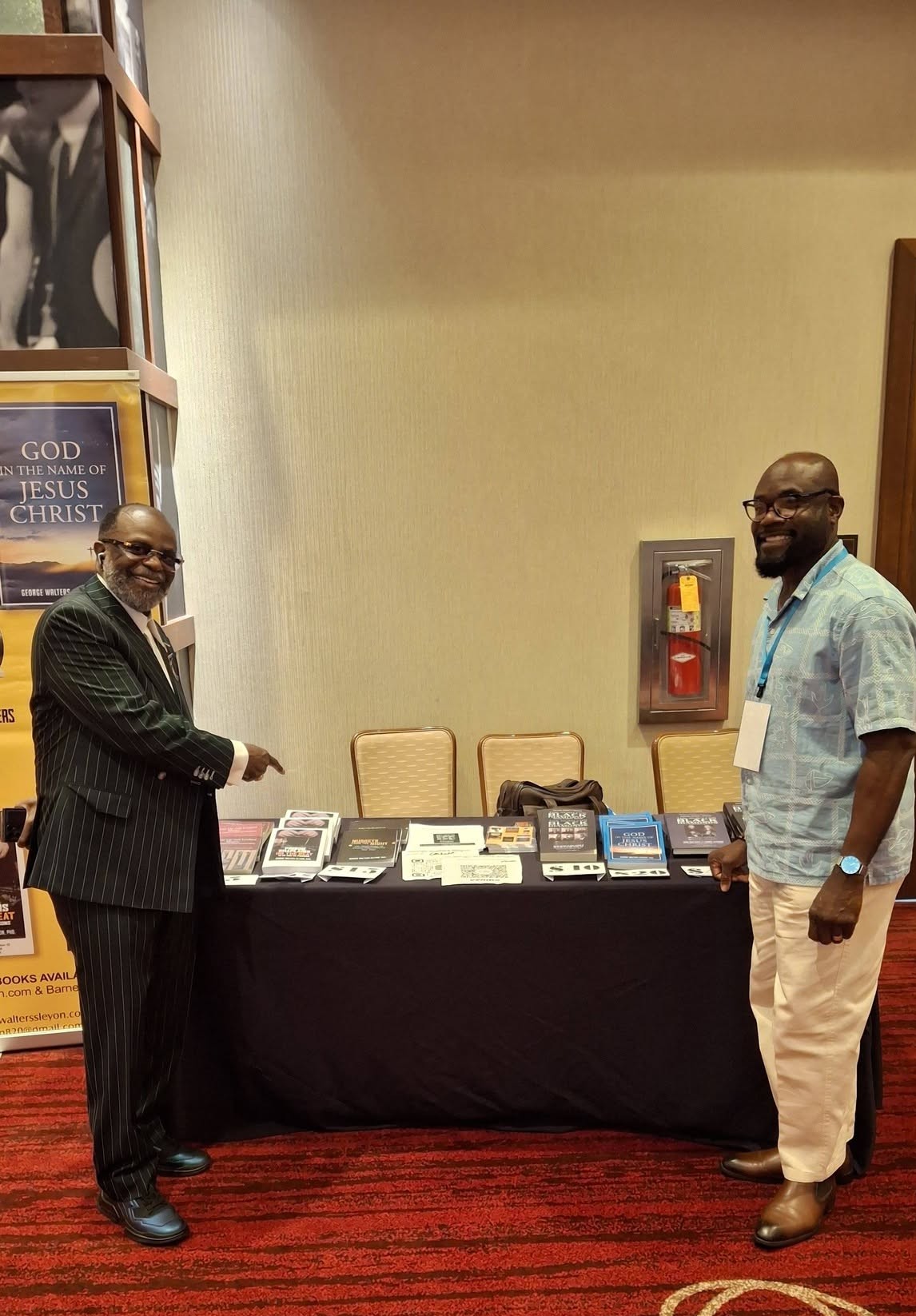
Bishop Samuel L. Green Sr., Presiding Prelate of the First Episcopal District of the African Methodist Episcopal Church, stops by Dr. Walters-Sleyon's book table to offer his support at the 2026 ASPIRE Conference.
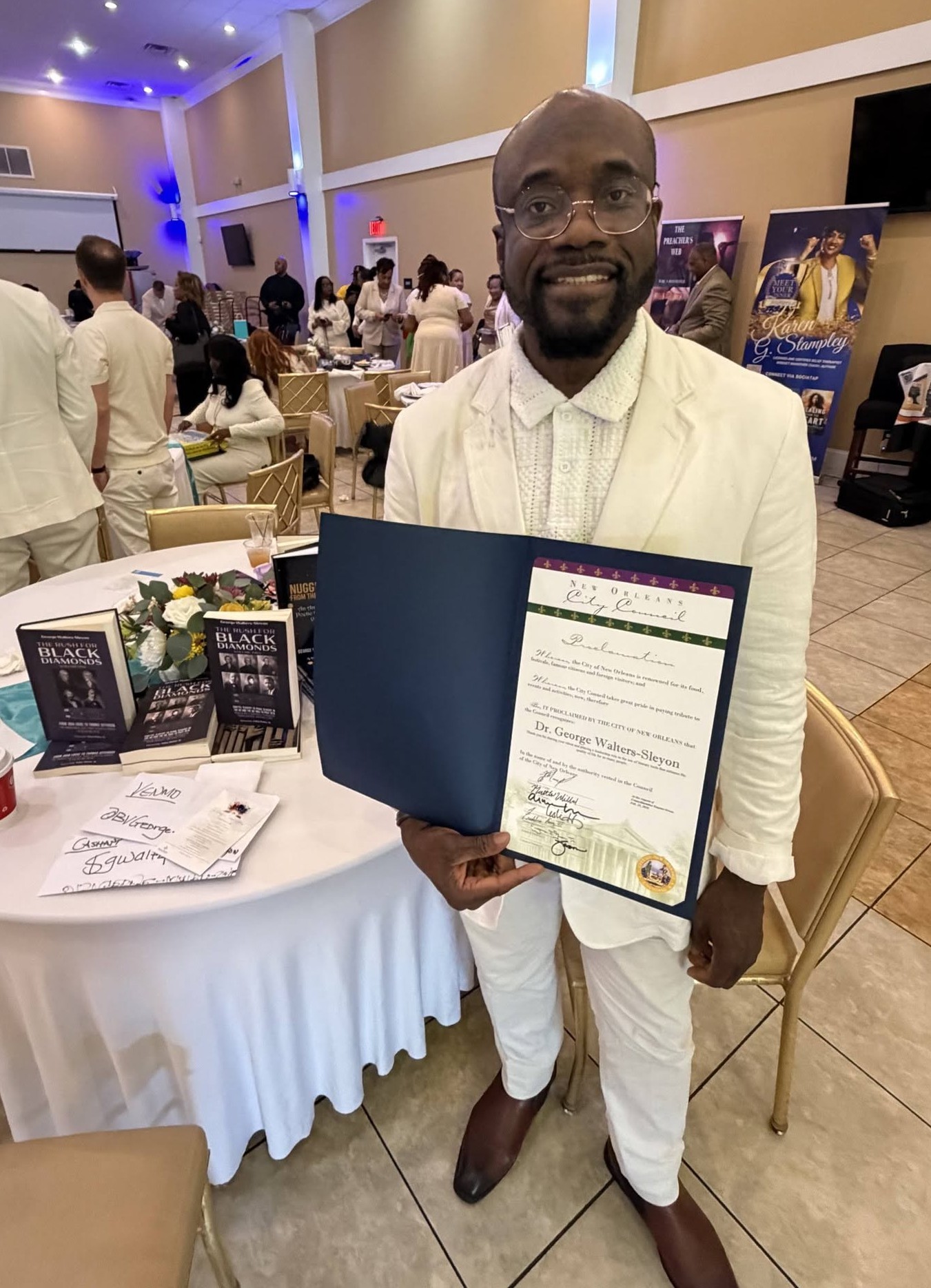
Dr. Walters-Sleyon received an official Proclamation from the City Council of the City of New Orleans, recognizing his leadership in using literary tools to enhance the quality of life of others — presented February 21, 2026, at the request of Councilmember Eugene Green, and signed by the full Council.

Beyond the podium and the page, Dr. Walters-Sleyon is a gospel recording artist with two albums — I Believe (1998) and Hold On – You Will Survive (2004) — drawing on hymnody, spirituals, and songs from his Liberian heritage. His gospel single "God's Been Good to Me" was nominated Gospel Single of the Year in 2004.

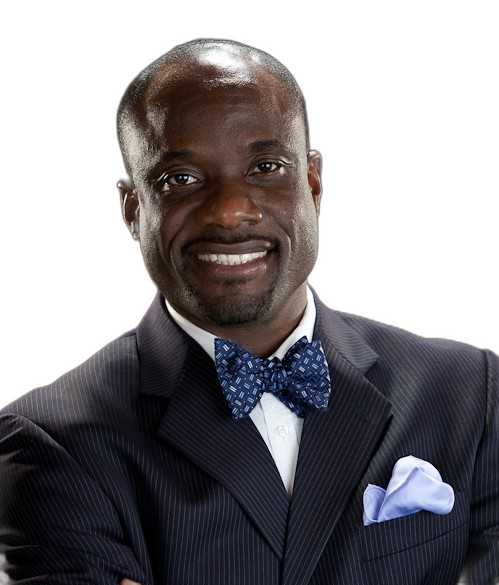
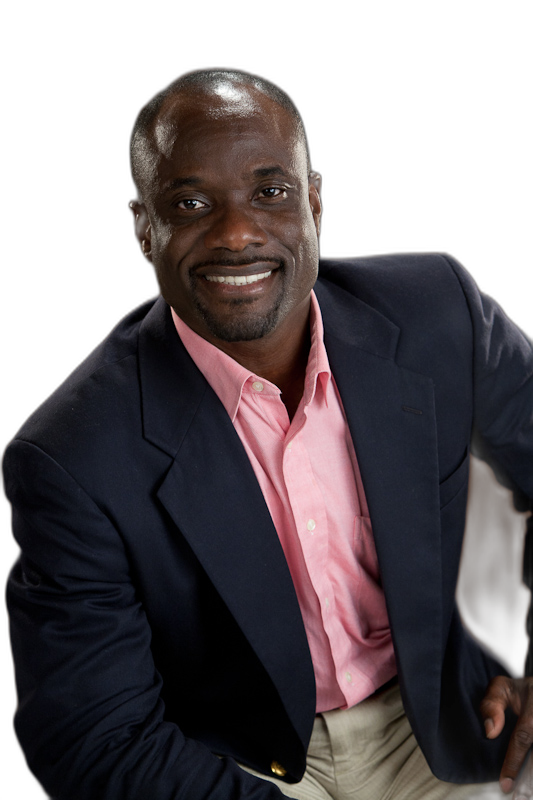
Born in Liberia — a nation founded by freed American slaves, shadowed by colonialism — Dr. George Walters-Sleyon has spent decades turning that origin into a lens on race, religion, law, and human dignity. He holds a Ph.D. from the University of Edinburgh in Practical Theology, Comparative Criminal Justice (US & UK), and Applied Ethics, an M.Div. and S.T.M. from Boston University, and a BA from Central University College, Ghana. A McDonald Distinguished Fellow at Emory University and Associate Fellow of the Scottish Centre for Crime and Justice Research, he founded the Center for Church and Prison, Inc. and teaches philosophy and criminology at Bunker Hill Community College. He is the author of six books — including The Rush for Black Diamonds, Vols. 1 & 2, now used as a university textbook — and speaks nationally and internationally on criminal justice reform, restorative justice, and the legacies of the transatlantic slave trade. An ordained AME elder and pastor of St. James AME Church in Danbury, CT, he is also a singer-songwriter whose gospel single "God's Been Good to Me" was nominated Gospel Single of the Year in 2004.
Watch Dr. Walters-Sleyon introduce his work
A single-page one sheet with everything event organizers, podcast hosts, and press need. (There is no separate media kit.)
Dr. Walters-Sleyon is available for keynotes, panels, podcast interviews, university lectures, faith-based convocations, and media appearances. All booking and media inquiries are handled by his publicist.
Tell us about your event and we'll follow up with availability and a formal quote. This opens a pre-filled email to his publicist — nothing is submitted automatically.